Select Format / Edition
Book Details
- Language
- English
- Paper Quality
- 80gsm Off-White Creamy Pages
Synopsis
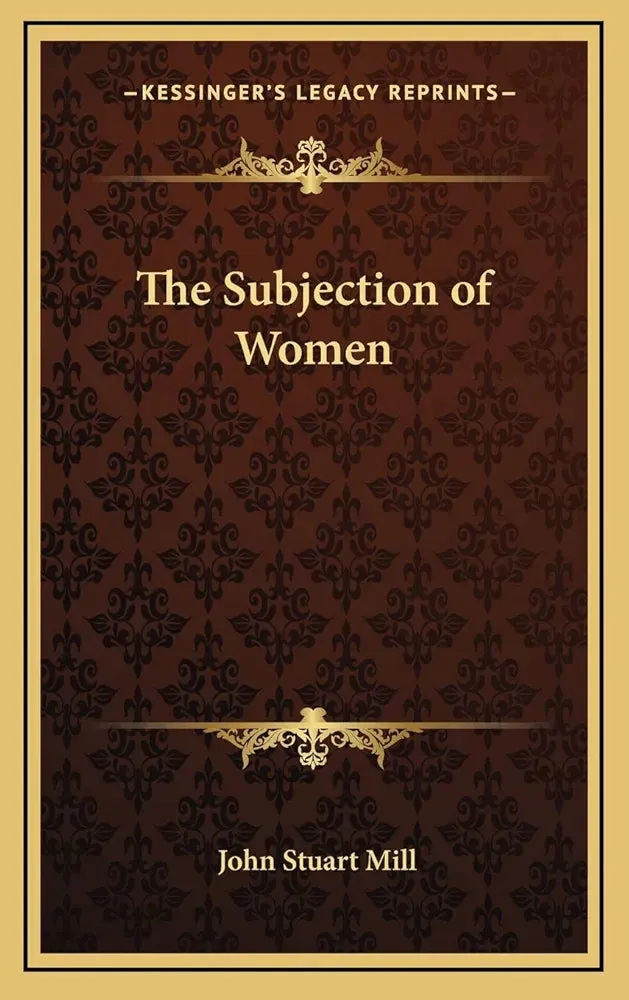
Published in 1869, John Stuart Mill’s The Subjection of Women mounts a forceful case for women’s equal rights and a searching critique of the patriarchal order of his day. Mill, a leading British philosopher, economist, and political theorist, contends that women have been systematically oppressed and subordinated by men throughout history, and that this arrangement is both unjust and irrational. The work is shaped in part by the influence of his wife, Harriet Taylor, whose thinking helped him develop a humane strain of utilitarianism sympathetic to women’s rights, labor unions, proportional representation, and other liberal causes.
The essay unfolds in two parts. In the first, Mill examines the historical and cultural roots of women’s subordination, tracing them back to ancient Greece and Rome, and argues that this subjection is neither natural nor inevitable but the product of social and cultural norms that can and should be changed. In the second, he sets out a vision of a society in which women are equal to men in every respect, equally capable in all areas of life and entitled to equal opportunities to develop their talents and pursue their interests, along with the same political and legal rights as men, including the vote and the right to hold public office. His stated aim is to show that the principle governing existing relations between the sexes—the legal subordination of one sex to the other—is wrong in itself and a chief obstacle to human improvement, and that it ought to be replaced by a principle of perfect equality admitting no power or privilege on one side and no disability on the other.
A groundbreaking work, The Subjection of Women helped shape the feminist movement of the late nineteenth and early twentieth centuries and remains an important text in the history of feminist thought and a powerful reminder of the ongoing struggle for gender equality.