Select Format / Edition
Book Details
- Language
- English
- Paper Quality
- 80gsm Off-White Creamy Pages
Synopsis
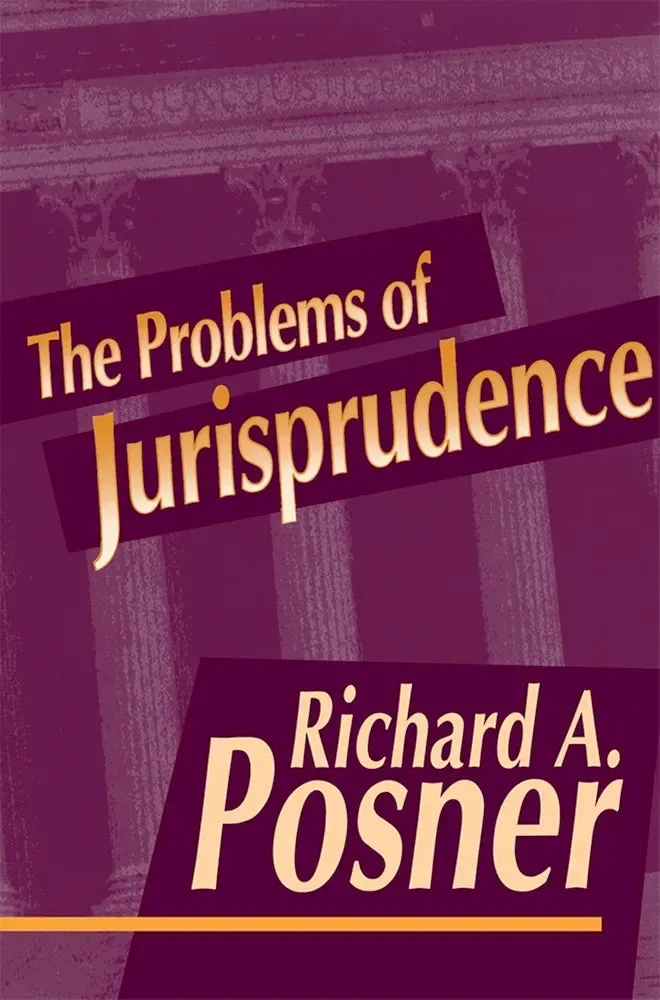
Richard Posner, one of America's most respected scholar-judges, presents his personal vision of the law in this work. For two millennia, legal philosophy has been shaped by two competing schools of thought: one holds that law transcends politics and, when applied by skilled judges, produces correct answers even to the hardest legal questions; the other insists that law is nothing but politics and that judges exercise essentially arbitrary power. Posner rejects both—the first as overly metaphysical, the second as too nihilistic—and makes the case for a pragmatic jurisprudence that turns away from formalism toward the factual and empirical. Laws, on his account, are not abstract or sacred entities but socially shaped instruments for steering behavior toward society's values.
Turning to how judges reach difficult decisions, Posner contends that neither logic nor science can guide them; instead they must draw on an assortment of informal reasoning methods that owe less to legal training and experience than one might assume. He notes that some of the greatest figures in American law rose above conventional notions of the lawyer's craft: Robert Jackson never attended law school, Benjamin Cardozo left before earning a degree, and Holmes was neither the most successful lawyer nor the most lawyerly of judges. From these examples Posner calls for a law that sheds excessive insularity and treats all knowledge, practical and theoretical alike, as material for its work.
The pragmatism Posner advocates means confronting problems concretely and experimentally, without illusions, keeping multiple lines of inquiry open, and above all insisting that social thought and action be judged as instruments for achieving desired human goals rather than as ends in themselves. Along the way he engages figures in jurisprudence from Antigone to Ronald Dworkin, along with recent movements including law and economics, civic republicanism, feminism, and libertarianism, submitting each to his rigorous scrutiny in a fresh and candid exploration of some of the deepest problems the enterprise of law presents.


