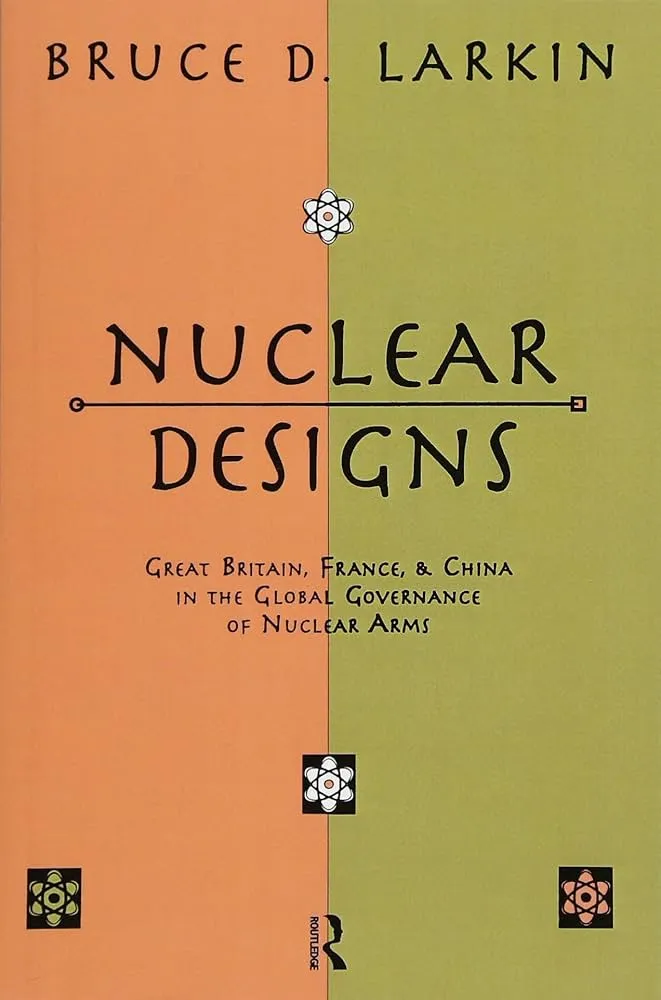
Nuclear designs : Great Britain, France, and China in the global governance of nuclear arms
৳410 ৳600
Select Format / Edition
Book Details
- Language
- English
- Paper Quality
- 80gsm Off-White Creamy Pages
Synopsis
Since the Cold War's end, global politics has shifted with remarkable speed: Eastern Europe has gained its freedom, the Soviet Union has dissolved, China is pursuing market reforms, and the United States and Russia have jointly pledged to end nuclear war. These developments have generated a new agenda for international security—yet they have not diminished the centrality of nuclear weapons. Advanced arsenals continue to grow among major powers, while the nuclear ambitions of Israel, Pakistan, India, North Korea, Iraq, and Iran draw intense scrutiny. As negotiations to renew the Nuclear Non-Proliferation Treaty make clear, serious disarmament efforts remain necessary. The end of the Cold War has not erased mistrust; rather, it has made possible an honest conversation about the utility of force and the need to confront shared fears.
Nations now confront a choice among competing nuclear futures. To avoid runaway proliferation, three paths present themselves: maintaining the status quo, disengagement, or abolition. Choosing the status quo, Larkin contends, means accepting a world held back from catastrophe only by terror and restraint—a world in which instant destruction is always possible. The book concentrates on the nuclear programs of Great Britain, China, and France because these are less familiar to students of international affairs, yet each has built a substantial capability that could decisively shape the outcome of coming global nuclear decisions.
Larkin concludes that these three lesser powers might decide nuclearism serves their interests, reject disengagement, and encourage proliferation. Should they instead abandon nuclearism, they would hold tremendous political leverage over Russia and the United States, as well as over undeclared and aspiring nuclear states. For the moment, only Britain, France, and China possess warhead inventories and production capacities large enough to strongly influence how the United States and Russia view their own strategic capabilities. Governments and political parties today, Larkin asserts, cannot guarantee protection against weapons of mass destruction; they must either build the political and social means to do so or accept a world in which nuclearism continues to shadow every aspect of nation building. The work will appeal to political scientists, policymakers, military analysts, and anyone concerned with the nuclear question.