Select Format / Edition
Book Details
- Language
- English
- Paper Quality
- 80gsm Off-White Creamy Pages
Synopsis
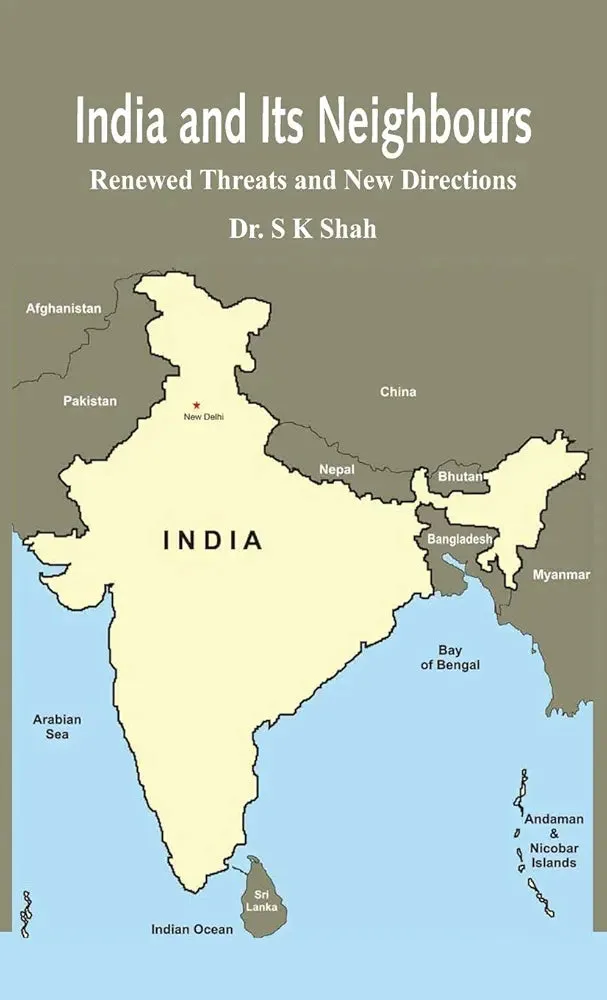
Over the past decade, shifting conditions in India's neighborhood and in the global order have pushed the country to take a closer look at its national interests. The old bipolar world has given way to a non-polar one in which several new powers have emerged, and India must now formulate policy options for its foreign and security policies. Policymakers need to consider India's relations with key countries in its immediate neighborhood, develop plausible scenarios for each, and propose options for the authorities to weigh. They will also have to anticipate the challenges and opportunities likely to arise over the next ten years. India's foreign policy has long viewed the neighborhood as a set of widening concentric circles around a central axis of historical and cultural commonalities, guided by the principles of Panchsheel, pragmatism, and the pursuit of national interest. In a time of rapid and continuing change, foreign policy must be able to respond optimally to new challenges and opportunities.
India maintains formal diplomatic relations with most nations and, as the world's second most populous country, its most populous democracy, and one of the fastest-growing major economies, occupies a distinctive place in global affairs. With the world's tenth-largest military expenditures, tenth-largest economy by nominal rates, and third-largest by purchasing power parity, India is a regional power and a potential superpower, and its growing international influence increasingly gives it a more prominent voice in world affairs. When Narendra Modi took office as India's fourteenth prime minister, one of his first decisions—set in motion even before his tenure formally began—was an unconventional act of diplomacy: inviting eight foreign leaders from neighboring countries to attend his inauguration. Though many commentators had predicted before his election that Modi would be a nationalist hardliner, a foreign affairs novice, or simply more of the same on external matters, he proved instead more active and, perhaps less surprisingly, more pragmatic than many expected. In two years, Modi has shown an instinctive understanding of power in the conduct of world affairs, and he has also benefited from being less politically hamstrung than his predecessor, Manmohan Singh, with whose worldview he in fact shares much in common. This book contains the fundamental and basic information on the subject.