Select Format / Edition
Book Details
- Language
- English
- Paper Quality
- 80gsm Off-White Creamy Pages
Synopsis
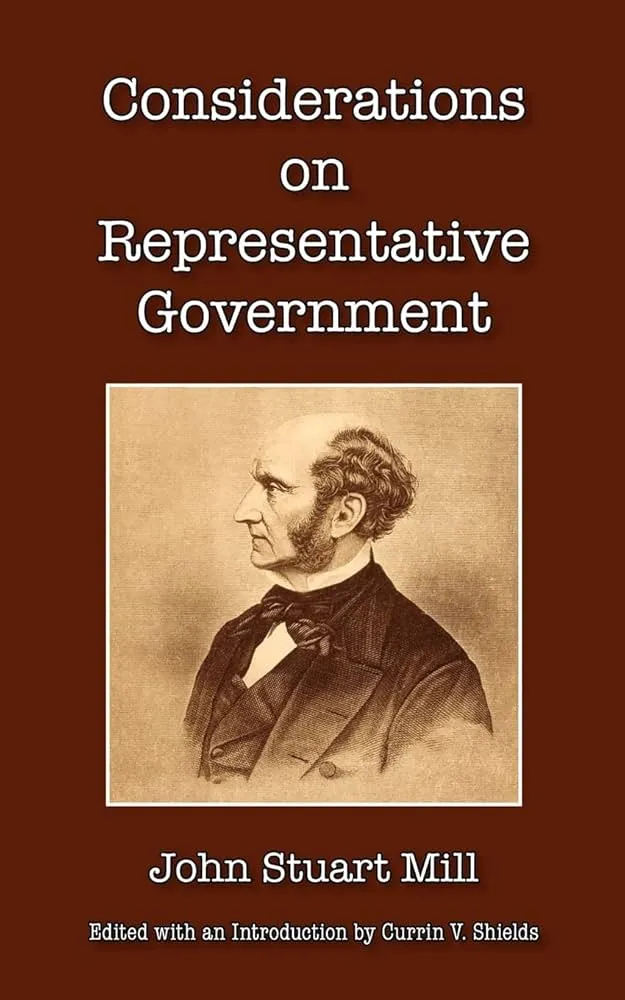
John Stuart Mill’s Considerations on Representative Government, first published in 1861, stands as a foundational text in political philosophy, offering a thorough and nuanced inquiry into democratic governance and its capacity to advance individual liberty, public accountability, and social progress. The work reflects Mill’s mature political thought and his vision of an ideal government that reconciles freedom with effective administration.
Mill makes a forceful case for representative democracy—not merely as a method for selecting leaders but as an essential means of fostering the moral and intellectual growth of citizens. He maintains that active engagement in public life nurtures personal responsibility and civic virtue, helping people develop into thoughtful, committed members of society. In examining various governmental structures and institutions, he explores the conditions required for effective representation and takes up such central questions as the separation of powers, the hazards of majority tyranny, the importance of minority rights, the value of political participation, and the need for an informed electorate. He also considers the merits of proportional representation and argues for the inclusion of women and marginalized voices in political life—positions far ahead of his era.
Though rooted firmly in liberal ideals, the book confronts the practical difficulties and limits of democratic systems. Mill cautions against unchecked populism, political apathy, and the concentration of power, emphasizing the necessity of institutional safeguards, education, and a vigorous civil society. Blending philosophical insight with practical judgment, his work remains a cornerstone of liberal democratic thought, continuing to provoke debate about the role of government, the duties of citizens, and how political systems can best serve freedom, justice, and collective well-being.