Select Format / Edition
Book Details
- Language
- English
- Paper Quality
- 80gsm Off-White Creamy Pages
Synopsis
Though Albert Camus is often regarded as a thoroughly modern thinker, he was himself keenly aware of the past, describing the shift from Hellenism to Christianity as “the true and only turning point in history.” In his view, modernity could not be fully understood without grappling with the aspirations first voiced in antiquity and later given their clearest form in Christianity—aspirations that amounted to a sweeping reorientation of human life across politics, religion, science, and philosophy.
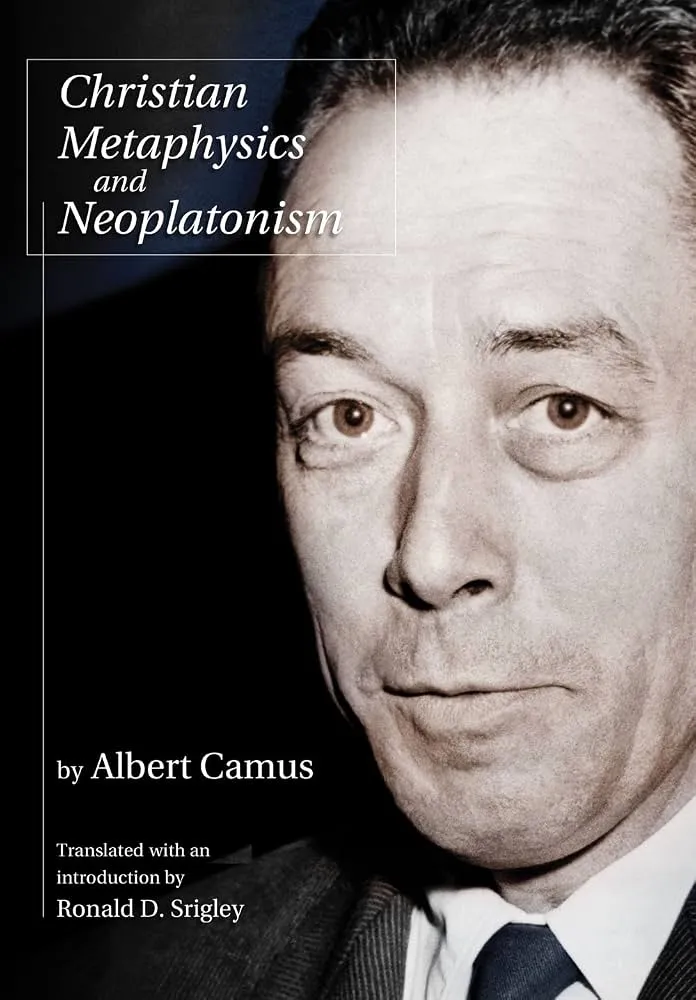
Charting that reorientation is the central task of Christian Metaphysics and Neoplatonism, one of Camus’s least-read works, known for years mainly through its appearance in a French omnibus edition. It marks his first sustained effort to understand the relationship between Greek philosophy and Christianity, tracing a path from the Gospels through Gnosticism and Plotinus to what he called Augustine’s “second revelation” of the Christian faith.
Ronald Srigley’s translation brings this seminal document to English-speaking readers as a stand-alone volume, offering a more literal rendering than the earlier McBride version. Srigley fully annotates the text, tracking down nearly all of Camus’s original citations and identifying many obscure sources; where Camus quotes an ancient primary source, Srigley supplies a standard English translation for accessibility. His introduction situates the work within Camus’s later, better-known writings, showing how its themes were reworked in subsequent books and arguing that Camus was among the great critics of modernity through his effort to disentangle the Greeks from the Christians. As the only stand-alone English edition and a long-overdue critical version, this fluent translation serves as an essential benchmark for understanding Camus and his place in modern thought.